
Lent marks the season before Easter and is a time for repentance and reflection through the practices of fasting, praying, and giving. We believe that through these practices, God shapes us more into the likeness of Christ. In the Apostle Paul’s words, “It is no longer I who live, but Christ who lives in me. And the life I now live in the flesh I live by faith in the Son of God, who loved me and gave himself for me.”
During this Lenten season, we encourage you to practice fasting, praying, and giving in ways that both challenge and encourage you. As you consider what you will fast or abstain from, also think of what you might pursue in that place. Perhaps in giving up a certain food, you decide to take a daily prayer walk around your neighborhood, praying for each home and family you pass. You may choose to step away from social media and in its place read through a few books of the Bible. Whatever you choose, we encourage you to make the decision prayerfully and with the wise counsel and support of people around you.
Here at Apostles, we have some resources and class offerings to help you in this year’s Lenten journey. However, don’t feel limited by what we have here! If you would like to begin a small group or study of your own, let us know so that we can help you with resources and encouragement.
Understanding the beginning of lent: Ash Wednesday
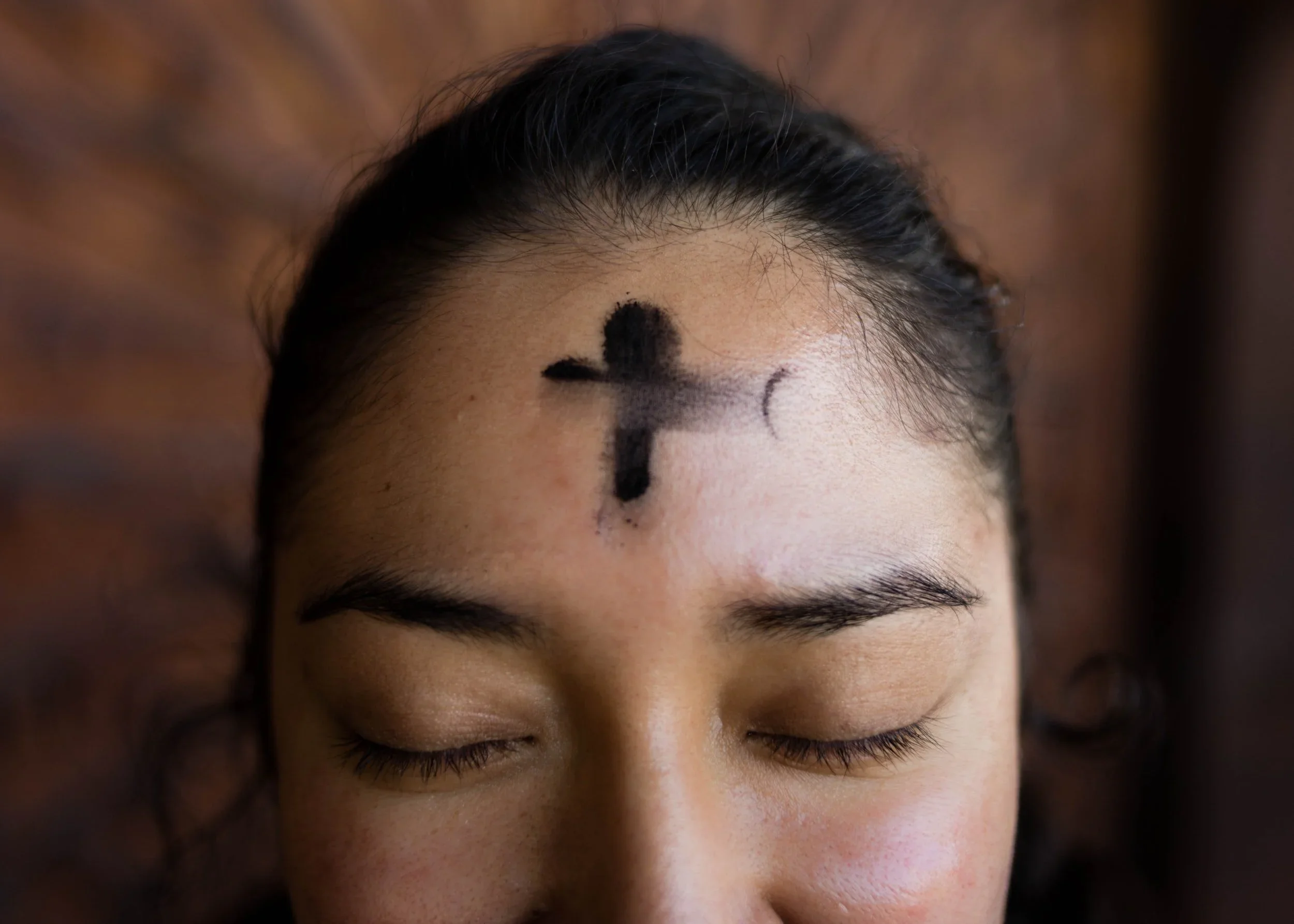
I have come to Ash Wednesday services for many years, 30 years as an adult Anglican/Episcopalian, and 17 childhood years as a Catholic. As a child, some years, I would brush away my short bangs to make sure everyone could see the cross of ashes, and other years, I covered up my forehead in hopes that my classmates wouldn’t look at me like I was different than everyone else… [Read more of Dcn. Susan’s Ash Wednesday sermon]

Lent: Week 1
Intro to Lent by Father Taylor Ishii
“I invite you, therefore, in the name of the Church, to the observance of a holy Lent: by self-examination and repentance; by prayer, fasting, and alms-giving; and by reading and meditating on God’s Holy Word” Ash Wednesday Exhortation
To observe Lent is to come face to face with our limits. We remember that from dust we came and to dust we will one day return, a sobering reality check. We experience the struggle to keep our commitments before the Lord. We wrestle with life lived on our own power and the weight of the world around us. We can feel lost in life, unsure of where to turn. But in Lent, God is still making a way if we can slow down to listen.
And it is precisely here that the Church reminds us that Lent is for repentance, for turning back to God. Anglican priest Esau McCaulley says in his introduction to Lent, “the church presumes that life is long and zeal fades, not just for some of us but for all. So it has included within its life a season in which all of us can recapture our love for God and his kingdom and cast off those things that so easily entangle us.”
Lent is the gift that we didn’t know we needed; an invitation to a journey back to God when we’ve wandered. To journey in Lent requires honesty: self-examination about the state of our hearts and the repentance necessary to turn back to God. And the good news of Lent is that we don’t do it on our own, but that God wants to walk with us as we prune out the things that are keeping us from him.
As we begin this season of Lent, we remember that it’s not about doing more things for God, but letting God work through us and refocus our hearts on him and his love.
Spiritual practice: Prayerfully meditate on Psalm 139:23-24 as an act of self-examination and repentance. “Search me, God, and know my heart; test me and know my anxious thoughts. See if there is any offensive way in me, and lead me in the way everlasting.”

LENT WEEK 2
Fasting by Father Gabe Holloway
Fasting is a discipline called for in this season but not always well-understood. Following his baptism, Jesus entered into a 40-day fast in the wilderness before beginning his public ministry (Matthew 4, Mark 1, Luke 4). And fasting was something Jesus taught on in his Sermon on the Mount (Matthew 6). So as we follow in the way of Jesus, we should give careful attention to fasting.
While there isn’t a prescribed way to fast, at least in the general sense of abstaining from food, there are some considerations when it comes to this long-held Christian practice.
Why do we fast?
Reasons abound for fasting that can be good and helpful (health and lifestyle), but the primary purpose of fasting in the Christian tradition is to fix our full attention on God that he might re-order our dis-ordered desires. In other words, the aim is that we would desire God above all else, as Christ did. The sin in our lives disrupts this goal, and we often find ourselves led by a hunger not for God and his Kingdom but for ourselves, for the world and its desires (1 John 2:17), and the “pattern of this world” (Romans 12:2).
Our hunger for food gets to the most fundamental of bodily desires. We must eat to live. That isn’t a disordered thing. But in fasting, in setting a time in which we pause the satisfaction of eating food, we give God a unique pathway into our lives that he might reveal to us what is truly disordered. It is not uncommon for those who practice fasting in the Christian tradition to gain clearer and better understandings of their own anger, fear, bitterness, greed, hatred, envy, and so on. God reveals these things as we are faithful to pursue him in our every desire and need, including food and hunger.
How do we fast?
While fasting is generally considered abstaining from all food, there are versions of partial fasting that can be helpful. Abstaining from certain types of food — alcohol, coffee, sugar, meat, etc. — can aid us in this work of unfolding our desires before God. Fasting often includes drinking water and sometimes fruit juices to help with blood sugar levels. And it’s highly recommended to consult your physician before beginning to fast, especially a prolonged fast (24+ hours).
If you haven’t practiced fasting before, consider starting small — abstain from a particular meal one day a week. Perhaps on Fridays, instead of your usual lunch, you might fast and spend that time reading and praying through the Psalms or one of the Gospels, in silence in the sanctuary at church, or taking a prayerful walk around the neighborhood. Whatever you do, fight the urge to distract and busy yourself away from the hunger. Give your hunger to the Lord. Allow him to speak into your life through it.
Finally, consider inviting a pastor or close friend to accompany you in your fast with prayer. Ask them to pray with you and for you and perhaps to check in from time to time to see how things are going. If you want to learn more about fasting, a great place to start is with the Rule of Life podcast by Practicing the Way, and Richard Foster has a entire chapter dedicated to fasting in his classic Celebration of Discipline.
Lent Week 3
Reflection on Almsgiving by Father Robert Seawell

“Almsgiving in the Bible refers to the voluntary and generous giving of resources to the poor and needy as a spiritual act of mercy and love”
Caring for the poor and needy is a central theme in both the Old and New Testaments, emphasizing care for the vulnerable ‘widows, orphans’ as service to God.
Of great importance is our giving is done out of a true love for God, without drawing attention to ourselves. When we invest what God has given us to impact the lives of others, we can trust that the results will make a difference both now and for eternity.
Almsgiving is separate from our tithe to the mission and ministry of the local church, although the local church does support through the financial gifts of its members the needs of the community and broader community of the world.
Here are a few closing thoughts on Almsgiving
Heart Over Performance: Jesus taught in Matthew 6:1-4 that alms should be given in secret, not to receive public praise.
Purification and Atonement: Scripture suggests that almsgiving acts as a sacrifice that cleanses from sin, similar to the Old Testament sacrificial system Luke 11.41
Treasure in Heaven: Giving is seen as investing in "heavenly wealth," as mentioned in Luke 12.33-34
Examples in Action: Acts 10 describes Cornelius as a man who gave alms generously, which were remembered by God.
Almsgiving is thus framed not just as social service, but as a spiritual discipline that fosters love, justice, and detachment from material goods.

Lent Week 4
Reflection on Prayer by Father Mark DiCristina
Prayer may be understood as an expression of desire, an honest offering or opening of the heart regarding “wanting,” and an aligning of our wanting or will and God’s. Ultimately, yes, it is about “Thy will be done,” about our trust and consent and submission. But towards that end God calls and invites us to make our wants and needs, and those of God’s world, known to God, as a participatory action with God, in our own spiritual formation, and also as 1) humans created to care for the world, and 2) as the Church, the Body of Christ, given for the healing and life of the world.
I am giving thanks this Lent for the book, “Thirsting,” by Strahan Coleman, which I recommend to you. He points to this beautiful paragraph in the section on Christian Prayer in the Catechism of the Roman Catholic Church (underline is mine):
2560 “If you knew the gift of God!” 7 The wonder of prayer is revealed beside the well where we come seeking water: there, Christ comes to meet every human being. It is he who first seeks us and asks us for a drink. Jesus thirsts; his asking arises from the depths of God’s desire for us. Whether we realize it or not, prayer is the encounter of God’s thirst with ours. God thirsts that we may thirst for him. 8 (7 John 4:10; 8 St. Augustine, Homily on John 4)
There could be so much more to be said about prayer, and if you’re stirred please to reach out to me, or any of the clergy, or anyone you perceive to be a little further along in the journey.
I pray, this Lent and always, that you and I might know the desire of God for us, reverberating within us, deep calling to deep, Spirit to spirit, awakening and intensifying our desire for God, enlivening manifold expressions of “prayer” –
which maybe is all to say
that really
prayer is about
love.
Amen.
Lenten Week 5

Meditating on the Word by Deacon Dan Thompson
"Blessed Lord, who caused all holy Scriptures to be written for our learning: Grant us so to hear them, read, mark, learn, and inwardly digest them, that we may embrace and ever hold fast the blessed hope of everlasting life, which you have given us in our Savior Jesus Christ; who lives and reigns with you and the Holy Spirit, one God, for ever and ever. Amen."
This is a Collect we pray during Advent and is found in our Book of Common Prayer. In the season of Lent we are offered room again to meditate on the Word of God. This can be guided by daily lectionary readings, weekly reflections on what we have read in church the previous Sunday, or even some Lenten devotion you may find helpful in this season.
The invitation from the Spirit in meditating on the Word is to allow the passage of Scripture soak deeply into your Spirit. Instead of using a “devotional guide” perhaps challenge yourself to take a small passage of Scripture and slowly read through that passage several times. A common method to follow can be found HERE.
A favorite Psalm of mine is Psalm 23. Quite often I will allow each phrase to slowly sink into my mind and heart and I consider the goodness and abundance of God.
This Sunday when you look at our readings for the day, listen as they are read and ask the Lord if there is one passage he might invite you to meditate on for the next week. Enter into this invitation with joy and prepare to have the Spirit stir something within you.
Intro to holy week
Father Taylor Ishii

Holy Week is the final lap of our Lenten journey thus far, an invitation to walk with Jesus and experience this momentous week in his life (and ours) in real time. In Holy Week, we slow down to truly enter in and see the gamut of human emotions and experiences on display: joy and sorrow, fellowship and betrayal, and even death on the cross. In the wisdom of the church and its worship, we are taken by the hand to experience our own way of the cross to death and rebirth through the sober yet deeply sacred services of this Holy Week.
The week begins with Palm Sunday, outside the gates of Jerusalem where we reenact his triumphal entry with waving palms and shouts of praise. The cries for the enthronement of a new king quickly turn to shouts of “crucify Him” as we are reminded that the only way for Jesus to be king is the way of the cross, for us and our salvation. It is a window into the complicated nature of our hearts, where we can both praise and ignore God in corresponding breaths.
As we move through Holy Week we arrive at the Triduum (sacred three days) of Maundy Thursday, Good Friday, Holy Saturday, and Easter Sunday. It is helpful to view them not as 3 separate days, but rather a culmination of the journey that began on Ash Wednesday. The word Maundy comes from the Latin word mandatum, or command, and remembers Jesus’ call for us to love one another through the fellowship we have in the institution of the Eucharist and through serving one another in the washing of feet. The joy of the Last Supper leads us to the stark ritual of the Stripping of the Altar to end the Maundy Thursday service. All the flowers, candle, and decorations that adorn the church are removed and only the cross remains in the sanctuary, a foreshadowing and centering of where we are headed on Good Friday.
The irony of the title Good Friday should not be lost on us, the terrible event of Jesus’ death on the cross is known as the best of all Fridays. We reenter the stripped down sanctuary and the clergy are dressed in only their black cassocks, as if for a funeral. It is appropriate to fast from food on this day, even our service does not partake in the Lord’s Supper, as we enter in and reflect on the pain and sorrow that lead us to the wondrous cross. It is a somber time to reflect on God’s great love shown forth in the cross.
Perhaps the most neglected day of Holy Week is Holy Saturday. At its core, it is a day of rest to reflect upon the time between Jesus’ death and resurrection. And as we rest, we wait for God’s final action of raising Jesus to life on Easter Sunday. We have included a short liturgy in our Triduum bulletin to be done at home to mark this time of prayerful rest and waiting.
Spiritual practice: Holy Week isn’t a time to simply do ‘extra’ but to embrace the existing rhythms and services that our church already offers. Slowing down helps us to walk at the speed of Jesus this week, through worship, prayer, and reflection. A unique offering this year at our church is two guided “Stations of the cross” opportunities with accompanying music in the evening on Palm Sunday and Good Friday. Take a Triduum bulletin home and reflect on the prayers and scripture readings as we prepare for Easter

-
Is Lent for Kids by Ruth Seawell
Is Lent really for children? Absolutely—yes! Lent is a wonderful season for children, not just adults. And it’s about so much more than giving up chocolate or turning off screens (though those can be meaningful, too!). At its heart, Lent invites us to slow down together, make some room for God, and notice his love in the middle of our busy, everyday lives.
When we pause and make space for God, we begin to see his love for us—and how we can show that love to others. Lent also helps us remember the journey Jesus walked as he made his way toward the cross. Sometimes grownups hesitate to talk about the harder parts of Jesus’s story with children, but kids experience sadness, confusion, and big feelings too. Walking through the story with Jesus gives them a safe, meaningful way to discover that God is with them in all of life.
So how can we help children make room for God during Lent?
One of my favorite family resources is Make Room by Laura Alary. She describes the traditional Lenten practices of prayer, fasting, and almsgiving as making time, making space, and making room—beautiful ideas children can truly understand. The book gently weaves Jesus’s story together with the eyes and experiences of a child, making it a lovely companion throughout the season.
I’ll be sharing simple ways your family can make time, space, and room for God at home as we move through Lent.
You can explore the book here:
https://lauraalary.ca/childrens-books-by-laura-alary/make-room-a-childs-guide-to-lent-and-easter/As Lent begins, try simply noticing the changes around you as a family.
Mardi Gras just wrapped up—talk about the things you saw, tasted, and enjoyed together.
I wonder what part they loved most?
I wonder what felt especially meaningful?
I wonder what part felt like it was truly “theirs”?
Here’s a fun guide if you’d like to look deeper:
https://www.teachingcatholickids.com/celebrate-mardi-gras/If your family took part in Shrove Tuesday or Ash Wednesday, you have even more to wonder about—pancakes, burying Alleluia banners, burning palms, or receiving ashes. These traditions are filled with sights, sounds, smells, tastes, and colors that speak to children in powerful ways.
What stood out to them?
What felt most meaningful?
What part connects to their own story?
Here are a few helpful resources to explore together:
As we begin this Lenten season, I’m so grateful to walk alongside all our COTA families.
May this be a gentle, meaningful, and hope-filled journey for you and your children—one where you discover God’s love in new and beautiful ways. -
Lent can feel really long—six whole weeks! Kids especially might wonder, “Are we there yet?” So how do we help everyone stay focused on the big celebration at the end—Easter?
We count down together!One of my very favorite Lenten countdown activities for families is the Crown of Thrones wreath. Have you noticed the crown of thorns on the check-in tables near the GP rooms? These are the same grapevine wreaths we use for our Advent wreaths. How cool is it that they can become our Lenten centerpiece too?
I encourage you to try it this year. No need to make it complicated! Choose a time that works best for your family. For us, Sunday dinner was perfect. Father Robert always felt more relaxed after services, and it became a sweet time to talk, laugh, and look ahead to the week. But instead of talking about all the things we have or should do during Lent, try wondering together about who God is inviting us to be during Lent.
Who is God calling you to be this week?
Where do you think God wants you to be kind or helpful?
What is God asking you not to be, like unkind or impatient?
Why might it be hard sometimes to be that person?
What can we do to grow into the person God hopes we can become?
Keep it light, gentle, and full of wonder. Talk with your children about how different a fancy king’s crown is compared to a scratchy crown of thorns. The soldiers made fun of Jesus by pretending He was a “king” and placing thorns on His head. (You can read about it in Matthew 27:29, John 19:2, and Mark 15:17.)
To make a wreath, either find your Advent wreath or get one at a craft store and grab a box of colored toothpicks. Have each child pick their color, and let them poke their toothpicks into the wreath (this part is surprisingly fun!). Place a purple candle in the middle and set it on your table.
Each week, when your family gathers, invite everyone to take out one of their toothpicks.
They can share something they did to try to be the person God is calling them to be.
Family members can also remove someone else’s toothpick if they saw them doing something kind, brave, or loving.By Easter, the toothpicks should be gone! Then you can decorate the wreath with flowers or ribbons, and replace the purple candle with a white one to celebrate Jesus’ resurrection and the new life He gives us.
If your children are ready to go a little deeper, you can gently explain that when we do things that hurt others or ourselves, it's like adding thorns to Jesus’ crown—but Jesus loves us so much that He takes those thorns and turns them into forgiveness and new life.
Keep it simple, gentle, and full of hope.PS, as a fun bonus, check out this Lenten offering for 2026. Leaning into the March Madness bracket theme, Christians around the world participate in an annual Lenten Madness online. This year’s theme – Bridge Builders & Community Makes. If you are a sports fan, this will be a fun, engaging activity for the whole family, especially older ones.
https://www.lentmadness.org/2026/02/lent-madness-is-back-%f0%9f%8e%89%f0%9f%94%a5/
-
Jesus went into the desert to figure out who he was and what he was called to do—basically the biggest “quiet time” ever. He made space, listened, and then crossed the River Jordan, ready to begin his work.
And if there’s one thing our Godly Play kids at COTA understand, it’s the desert.
Try reminding your children about Jesus heading into the desert to make space—and then wonder together: How can we make a little space, too?
Maybe it starts with cleaning their room (yes, Lent miracles can happen!). They could gather the toys, treasures, socks, and mysterious little objects they no longer need.
Or maybe there’s someone they need to say sorry to:
A sibling?
A friend?
A parent?
Saying “I’m sorry” is a lot like cleaning out your room. You pick up the messy stuff, toss what doesn’t belong, and suddenly everything feels bigger, lighter, and less sticky. Our hearts work the same way. Clean room, clean heart. Fresh start.
That’s what we do every Lent—we clean out our “rooms” and begin again, sparkling and new.
Wonder together:
What is that “room” really?
Do we have more than one room to clean out?
What does it feel like when the heart-house gets cleaned?
Some Other Ways to Empty (or Unclutter!) Your Heart
Prayer Hearts
Write the names of family members, teachers, or people who need love on paper hearts. Each morning, let your child pick one—like a spiritual lottery—and pray for that person all day.Kindness Notes
Encourage “secret heart notes” to surprise someone with kindness. Kids love being undercover agents of encouragement.Heart Cleaning
Draw a big heart on a whiteboard and write the little things that clutter our hearts inside it. Then let your child erase it all. Wonder together: Who is the real “eraser” that makes our hearts clean again?May this season be full of space, grace, and fresh starts for your whole family.
-
Praying – Let’s make it fun with pretzels and LENT
by Ruth Seawell
There are various versions of the story of how pretzels were created, but most agree that a young monk who lived in either France or Italy invented the now-popular pretzel treat in the 600s while baking unleavened bread as a Lenten fasting food. In that time, a common posture for prayer among Christians was to stand with arms folded over the chest so that each hand touched the opposite shoulder. Most versions of the pretzel story say that the monk twisted leftover unleavened bread into a shape which—accidentally or on purpose—resembled these “prayer arms”. Some versions of the pretzel’s story go on to say that the monk named his new bread creation “little arms” and used them as a reminder to fellow monks to offer extra prayers during Lent. These versions make the connection that Latin for “little arms” — bracellae — sounds a lot like the German word bretzel, which, in turn, sounds like our English word “pretzel”. Pretzels, then, are meant to remind us to pray.
Other versions of the pretzel story say that the monk used his new bread creation as a treat or reward for children who recited their prayers. In these versions of the pretzel story, it is said that the monk named his creation pretiola, which is Latin for “little reward”. Pretiola sounds like our word “pretzel”.
Still another version of the pretzel story adds that the shape of the pretzel represents the Triune God—Father, Son, and Holy Spirit — to whom Christians pray.
Whichever version of the pretzel story is the most accurate, one thing is definitely true: pretzels have a long history of being associated with prayer and the season of Lent.
May your Lenten journey be rich in all the traditions of prayer, fasting, and almsgiving, and, whenever you eat—or gift—a pretzel, may you remember to pray! See the following link for more fun ideas.
https://buildfaith.org/wp-content/uploads/2019/03/Lenten-Pray-tzel-Prayer.pdf
Can you find the pretzels in the drawings?
-
For this week’s family practice, I’m drawing from a new book I’m reading—Wonder: 52 Conversations to Help Kids Fall in Love With Scripture by Meredith Miller. Honestly, I’m not sure children need much help “falling in love” with Bible stories; I’ve never met a child who didn’t enjoy hearing them. But Miller’s goal goes beyond helping kids enjoy a good story. She wants to help parents guide their children to know the Bible on its own terms—ancient, stylistic, composed of many genres and perspectives. She reminds us that kids fall in love with the Bible not because it gives every answer, but because it invites them to explore big questions.
When we read the Bible with our children, we aren’t just passing on information about God—we’re beginning a lifelong journey of helping them know God. This means letting go of older approaches focused on memorization or behavior. Instead, our goal should be to help children see that God is trustworthy and present with them—even in the “desert places.”
The Bible can feel intimidating to parents who think they need to know all the answers. And yes, kids will ask tough questions. But you don’t need every answer. You just need to be willing to wonder with them. Storybook Bibles like The Jesus Storybook Bible are wonderful, especially for independent reading. But I encourage you to go deeper with a book like Miller’s. Don’t just read stories to your child—explore them with your child. Read stories that connect to the bigger narrative of Scripture: God’s dream for the world and the ways that dream can be reimagined. Keep the focus on God as the main character, not humans as the heroes.
Where do you begin? Miller offers several simple starting points:
Start at the very beginning.
Start with a story that has confused you or your child (hello, Revelation!).
Start with Jesus stories.
Start with whatever your church or faith community is exploring (like the lectionary or your Godly Play schedule).
And remember her encouragement: “Read together, out loud, inviting interruption and leaning into what makes you curious.” Saying “I don’t know” is not a weakness—it helps children see that faith is not about certainty, but trust. It models how we carry our questions, listen to others, learn new things, and sometimes sit with the unknown. And this curiosity brings us back to Scripture again and again.
-
Children often ask hard questions like, “Why do they call it Good Friday?” “What is good about Jesus being killed?” “Why did they kill Jesus?” These are honest questions, worthy of real wondering. We often respond with, “Jesus died for our sins,” which isn’t entirely wrong—but it can be confusing for children who don’t yet understand the world of Romans, Caesar, and an empire that felt threatened by Jesus. Without that context, children sometimes assume the blame is personal. Feelings of guilt and shame can begin early, when what they need most is an introduction to a trustworthy and loving God.
When we say Jesus died for our sins, children may hear only that their own mistakes are the focus, rather than the larger message: that Jesus came to show us a new way of living together in God’s Kingdom. Our faith is communal—children and adults alike are invited into ways of living that reflect God’s goodness in our shared life.
So how do we help children experience this? Let me offer you Holy Week!
Palm Sunday (March 29th, 10:00) sets the stage with Jesus’ triumphant entry into Jerusalem—an event everyone misunderstood. Join your children in waving palms and shouting “Hosanna!” Later that day, consider reading the Passion story together to see how quickly those hosannas faded.
Maundy Thursday (April 2nd, 6:00) is sometimes thought to be too solemn for children, but skipping it means they miss important parts of the story: the Last Supper, Jesus washing the disciples’ feet, sharing bread and wine, and promising to be present whenever we do the same. We’ll offer a separate Seder Meal and Foot Washing for children, and then they’ll join their families for the stripping of the altar.
On Good Friday, children are invited to a kidfriendly Stations of the Cross (April 3rd, 6:00 PM). This is a gentle and meaningful way to help them understand the question of why Jesus was killed, and how we, too, are part of that unfolding story. And of course, we come to the joy of Easter Sunday (April 5th).
Holy Week gives families the chance to walk through the Mystery of Easter together—where the sadness of the cross meets the joy of the resurrection. In Godly Play, we talk about how the two parts of the story can’t be separated. Don’t celebrate Easter without Good Friday; you lose half of the mystery. Maundy Thursday and Good Friday help us remember that Jesus died for us, and Easter is when we celebrate that Jesus is alive. We raise our Alleluia Banner (9:30 am), ring our bells, and rejoice.
In the Mystery of Easter, Jesus is still with us—just as he was with the women at the tomb and the disciples on the road to Emmaus. Easter turns everything upside down and inside out. Alleluia, Alleluia, Alleluia.